When something feels off
Free plant doctor.
Use a photo and a little context to make sense of yellow leaves, spots, droop, pests, or a plant that has simply lost its spark.
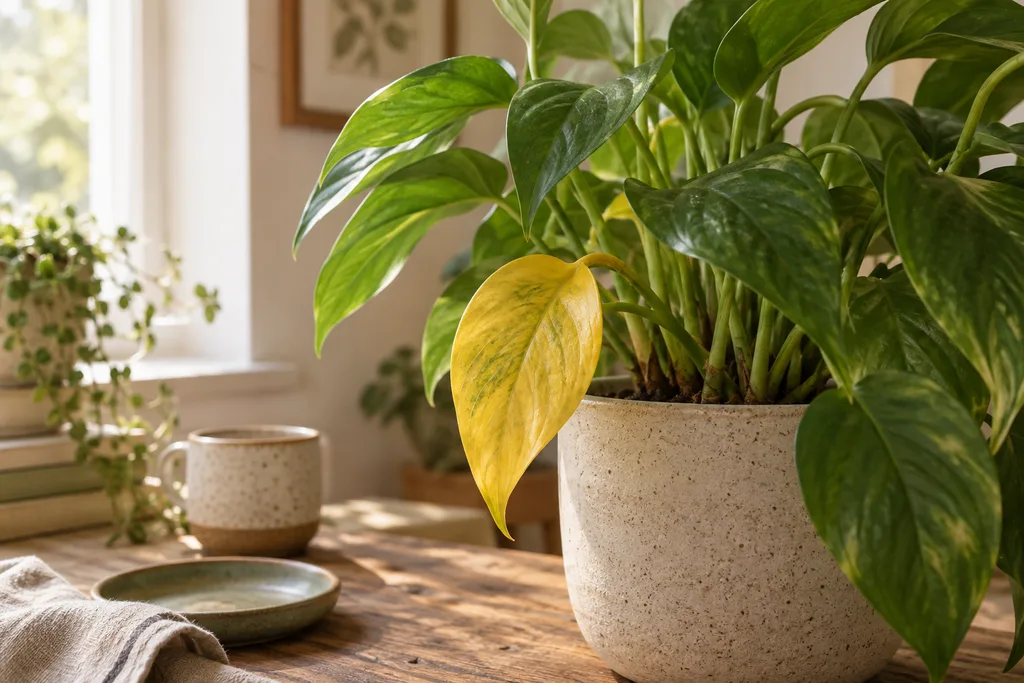
Show where the change is happening
Choose a frame that shows the affected leaf or stem and enough of the plant to see whether the change is isolated or spreading. A close detail may help when you can see a mark or pest.
Add a short timeline
Say when it began, which leaves changed, and what shifted recently: watering, light, temperature, or location. These details can help place the photo in context.
Start with observation
Several causes can look similar in a photo. Check the growing mix and visible conditions before making a change; the result is a starting point, not a diagnosis.
How a plant check works
Share a photo of the affected area with enough of the plant around it to show whether the change is local or spreading. A short note about when the change started and what shifted recently makes the result more useful.
Observation before treatment
Visible symptoms can overlap between causes — watering too much, watering too little, and low light can all produce similar leaves. The result lists possible causes and the checks that narrow them down before you change anything. See what to check first in the yellow leaves guide.
Common questions
Can a photo diagnose my plant?
No. Photos show symptoms, not causes. The result suggests possible causes and the observations that help narrow them down — a starting point, not a diagnosis.
What belongs in the note?
When the change began, which leaves changed first, and anything that recently shifted: watering, light, temperature, repotting, or a new location.
When should I ask a specialist?
If a person may have eaten the plant, contact a local poison control service promptly. If a pet may have eaten it, contact a veterinarian or an animal poison control service promptly. For a fast decline or a pest or disease you cannot identify, a local extension service or plant professional can help.