In brief
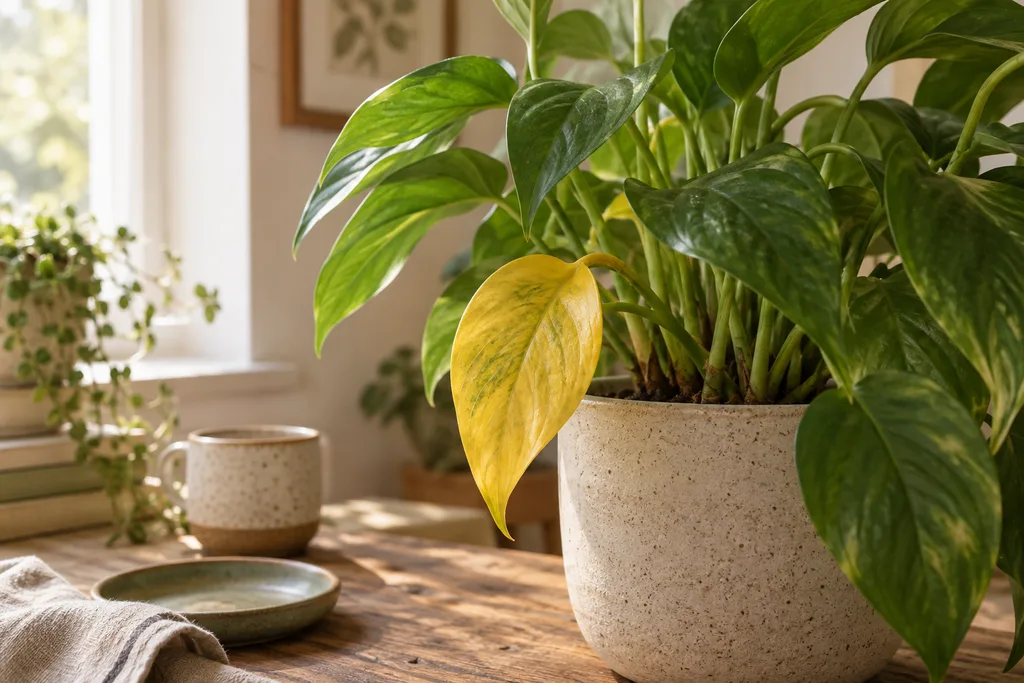
- One older lower leaf can be normal ageing; several changed leaves deserve a closer look.
- Check the mix, drainage, light, temperature, and recent changes together.
- Choose one reversible next step — not repotting or spraying on colour alone.
- A photo shows the pattern, not the roots, the whole pot’s moisture, or a disease.
A single older lower leaf turning yellow can be part of normal leaf ageing. Several leaves changing together, or yellowing in new growth, deserves a closer look. The Royal Horticultural Society lists several possible causes for yellow leaves, and University of Maryland Extension also describes the overlap between watering, light, and growing-medium problems. Colour by itself cannot tell you which one applies.
Start with the pattern
Look at which leaves changed. Is it one old leaf near the base, or many leaves in different parts of the plant? Are newly emerging leaves affected? Are the leaves uniformly pale, or are there distinct marks, edges, or patches? Take a clear photograph that shows the pattern and write down when you first noticed it. A picture of only the most yellow leaf may hide the most useful clue: whether the change is isolated or spreading.
An old leaf that yellows while the rest of a stable plant grows normally may need observation rather than an urgent intervention. The RHS distinguishes isolated older-leaf yellowing from more widespread changes. See its leaf damage guide. That distinction is a starting question, not a guarantee that the plant is healthy.
Check the pot and growing spot
Feel the potting mix below the surface using a method suited to the plant, then check whether the container drains and whether water is standing in the outer pot or saucer. The surface alone may not reflect moisture deeper in the root zone. Next, consider the light at the plant’s actual position, recent movement, heating or cooling changes, and whether growth has slowed. Maryland Extension’s yellow-leaf guidance names both too much and too little water, light extremes, and unsuitable media among possible causes. The RHS recommends checking practical growing conditions when a houseplant looks poorly.
Look at both sides of leaves and along stems for visible insects or residue, especially if marks or distorted new growth accompany yellowing. Finding a pest is different from assuming that a yellow leaf means one is present. The University of Minnesota Extension inspection guidance explains where to look.
Choose a small next step matched to what you found
If the mix remains damp and drainage is poor, pause watering and correct standing water. If the mix is dry by the plant’s normal standard and it needs water, water through a draining pot and empty the runoff. If the light changed recently, observe the plant in its current position and compare its needs with the spot before moving it again. These are examples of checks and reversible actions, not a promise that one action will restore a leaf.
Do not repot, fertilise, or spray a plant because the word “yellow” appears in a search result. An unnecessary intervention can add another change when you are trying to understand the first one. Keep a short note: “Two older leaves yellowed after a move; mix damp below the surface; no water today.” At the next check, compare whether new leaves are affected or the pattern is stable.
When a photo is not enough
A photograph can show distribution and visible features; it cannot confirm the condition of roots, the moisture of the entire pot, or many pathogens. Maryland Extension explains why photo diagnosis has limits. If the decline is rapid, affects a valuable collection, or involves a plant that may be unsafe for a person or pet, consult an appropriate local professional.
Takeaway: Describe the pattern, check the pot and environment, then make one justified change and watch what happens next.
Sources and further reading
- Royal Horticultural Society, Leaf damage on houseplants
- University of Maryland Extension, Yellowing Leaves on Indoor Plants
- Royal Horticultural Society, How to help a poorly houseplant
- University of Minnesota Extension, Managing insects on indoor plants
- University of Maryland Extension, photo diagnosis limits
Guidance checked 27 September 2026. No symptom in this guide confirms a disease, deficiency, or pest.