In brief
- A limp plant is losing water pressure in its leaves — the cause can be too little water, too much, or neither.
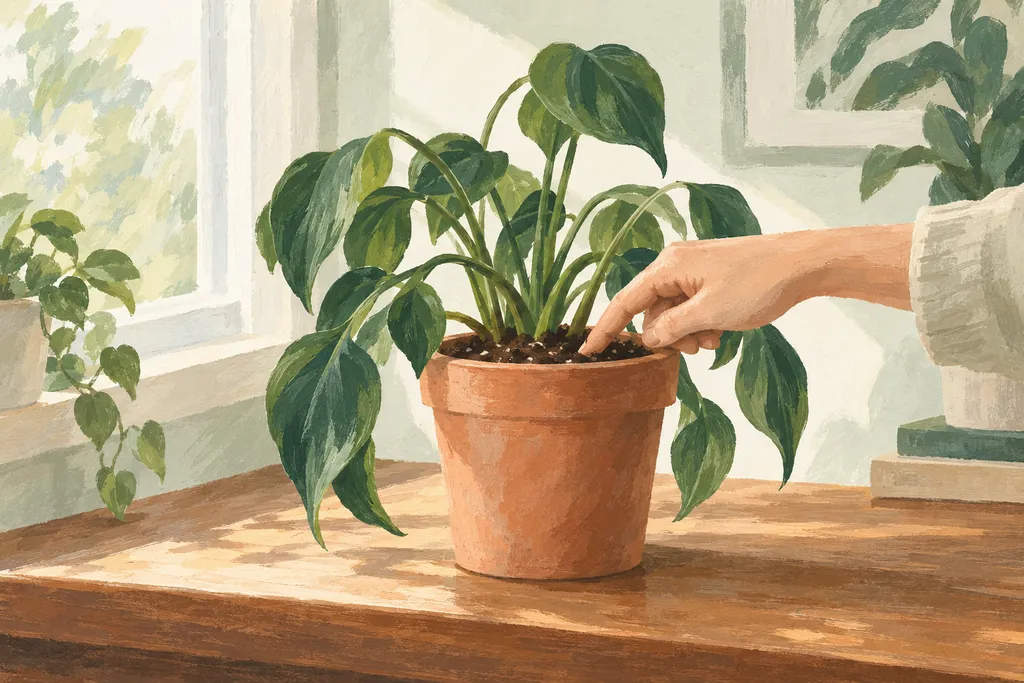
- Feel the mix below the surface before you reach for the can; the same droop follows opposite problems.
- A slump on wet mix points at the roots, not at more watering.
- Note when it started and what changed; that record is what a check needs.
A drooping plant is the symptom most likely to trigger a reflex watering — and the one where that reflex can do harm. Clemson HGIC's disorders factsheet (opens in a new tab) lists wilting among symptoms that follow both a lack of water and an excess of it, alongside root rot, heavy feeding, and soluble-salt buildup. The same limp posture can therefore arrive from opposite directions, so the check comes first.
Wilt is a water-pressure problem, not always a watering problem
Leaves hold their shape because water inside the plant keeps cells firm. When roots cannot supply water fast enough — or cannot supply it at all — that pressure drops and the posture softens. The reason sits somewhere along the path from the mix to the leaf, and only part of that path is visible above the rim.
A photo shows the slump clearly. It cannot show whether the mix below the surface is dry or saturated, and it cannot see the roots — so treat a look at the leaves as the start of the check, not the end of it.
The dry case: what thirsty wilt looks like
The thirsty case is the easier one to read. The mix feels dry not only on top — where it always dries first — but a finger's depth below. The pot often feels noticeably lighter than its usual watered weight; WSU Extension's houseplant chapter (opens in a new tab) suggests feeling the pot's weight as a guide to how saturated the mix is. Soft, newer growth tends to slump first.
- Mix feels dry below the surface, not only on top.
- The pot feels light compared with its usual weight after watering.
- The mix has pulled back from the pot's rim, so added water may run straight down the gap.
- The plant often perks up within some hours of a thorough drink — sagging that persists after watering deserves a closer look.
If water runs straight through a gap at the pot edge, the root ball may not have wet at all; the watering guide covers checking below the surface and letting a conventional pot drain. WSU also notes that a plant which wilts between normal waterings may have outgrown its pot — a root-filled pot holds less mix, and less mix stores less water.
The wet case: wilt with damp mix
The harder case looks identical above the rim. The mix is damp or wet, yet the plant still slumps — and watering again makes it worse, not better. Clemson explains the mechanism: overwatering can kill roots by depriving them of oxygen, and it lists root and stem rot among the diseases that too much water makes more likely. Roots that are dead or damaged cannot move water upward, so the plant wilts while sitting in wet mix. University of Maryland Extension (opens in a new tab) calls overwatering the most common reason indoor plants fail.
Two surface clues support the wet reading. WSU points to moss, fungus, or mushrooms on the soil surface as a sign the pot is being watered too much. And a cover pot or saucer holding runoff keeps the mix bottom wet long after watering, so lift the inner pot and check what it is standing in.
The telling contrast: A droop on dry mix usually wants water. A droop on wet mix usually wants a look at the roots — not another drink.
Roots, pot, and recent moves
When the mix answer is ambiguous, read the pot and the calendar instead of the leaves. Roots emerging through the drainage hole or crowding the soil surface suggest the plant has outgrown the pot, per WSU. A yellow-to-white crust on the soil surface, a ring at the soil line or drainage hole, or deposits on the outside of a clay pot are WSU's signs of soluble-salt buildup — and Clemson's wilt list includes both salt accumulation and too much fertilizer. A heavy recent feed belongs on the suspect list; WSU also advises never fertilizing a wilted plant — and that advice assumes the wilt is thirst. If the mix check says the plant is dry, water and let it recover before feeding; if the mix is already wet, hold the can and turn to drainage and roots instead.
Timing matters as well. Clemson notes that leaf drop after a significant change in environment should last only about three weeks; a slump that begins right after a move, a new window, or a heater coming on often belongs to that adjustment story rather than a watering fault.
If the checks above and below the rim stay inconclusive, the next observation is under the plant. The root-check guide shows how to slide a plant out and what healthy and suspect roots look like.
What to note before you act
Before changing anything, write down a short state. It is the information the plant doctor works with — and it is the record that later shows whether your change helped.
- When the droop started, and whether it built over days or arrived within a day.
- How the mix feels below the surface — dry, damp, or wet — and whether the pot is standing in runoff.
- Pot weight compared with its usual feel after watering.
- What changed in the last couple of weeks: a move, repotting, a heat source, a cold draft, a feed.
- Whether the whole plant slumps or only some stems — and whether leaf tips or edges changed alongside.
Maryland Extension advises noting the timing, progression, and pattern of symptoms when working out a cause — the same record serves here. Photograph the plant too; a dated picture shows later whether the posture was improving or declining.
When droop is a same-week problem
Most droops are a check-then-wait problem. A few deserve acting sooner. A plant that collapses suddenly while sitting in wet mix is pointing at the roots: slide it out and look. Clemson recommends discarding a plant when most of its roots are already dark, soft, and dead — a call you can only make by looking. The root-inspection guide covers that check; a photo cannot do it.
If the posture keeps declining after the mix, drainage, light, and recent moves have all been checked and corrected, the cause may sit beyond what observation at home settles — that is the point for locally appropriate advice, such as an extension service or plant clinic.
Keep in view: Droop reads the plant's water pressure. It never reads the cause by itself — the checks do that.
Sources and further reading
- Clemson HGIC, Common Houseplant Diseases and Disorders (opens in a new tab)
- Washington State University Extension, Chapter 14: Houseplants (PNW Gardener's Handbook) (opens in a new tab)
- University of Maryland Extension, Yellowing Leaves on Indoor Plants (opens in a new tab)
Sources last checked 1 October 2026. Posture is a starting observation, not a cause; check the mix and the roots before treating any wilting plant as thirsty.
Spotted an error? Tell us — include the page URL and what looks wrong.