In brief
- A photo cannot see below the soil line — a root check is the look you take yourself.
- Slide the plant out gently, read colour and texture, and put it back or pot on.
- Brown-to-black, soft roots suggest rot; a dense circling mat suggests it has run out of room.
- Write down what you found before deciding — the record is what the next step works from.
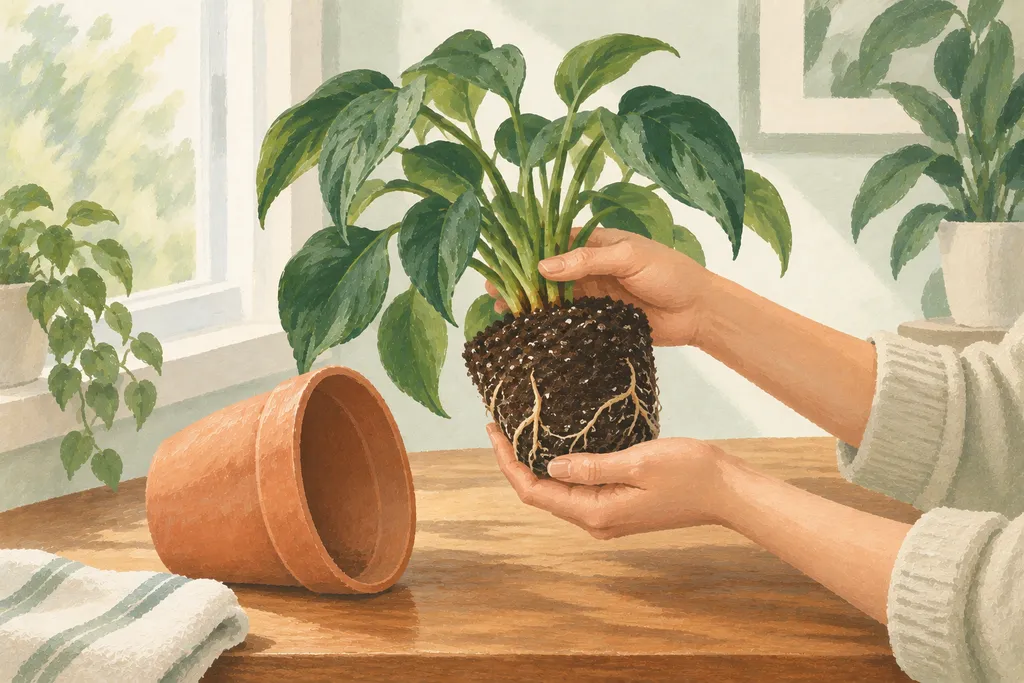
Some plant questions cannot be answered from above the soil line. When the leaves say one thing and the mix says another, sliding the plant out of its pot is a reasonable next check — not a treatment, just a look. Illinois Extension's repotting guide (opens in a new tab) begins its how-to exactly this way: gently knock the plant out of its container and look at the roots.
When a root check is worth the disturbance
Unpotting is a small stress, so it earns its place when it will answer a real question: a plant that keeps declining while the above-soil checks come back clean, a slump that persists on wet mix, or a pot you suspect the plant has outgrown. Illinois lists the crowding clues you can spot without unpotting first — roots growing through the drainage holes, roots appearing on the soil surface, a soil mass filled with roots, new leaves smaller than usual, and wilting between normal waterings. One or two of those signs is a reason to look.
A healthy plant in mid-growth that shows none of these signs usually does better left alone. The check has a cost — some root hairs break whenever a root ball moves — so it is a tool for answering a question, not a routine.
How to slide a plant out without damage
- Work over a tray or newspaper, somewhere easy to clean. Mix is a handled material — wash your hands afterwards.
- Water lightly beforehand if the mix is bone dry; Montana State's repotting notes suggest moistening the root ball so it holds together and slides more easily.
- Tip the pot sideways, support the stem base between your fingers, and ease the root ball out rather than pulling on the stem.
- If it is stuck, tap the pot's sides and base or run a knife around the inside edge — a plant grown into a flexible plastic pot may need the pot cut away.
- Set the freed root ball down and look before touching the roots further.
If the plant came apart roughly — a snapped stem or a badly torn root mass — keep the pieces and note the damage; broken material still tells you something about root condition, and a photograph of it makes a better record than memory.
Healthy and suspect roots: colour, firmness, and what the sources say
Clemson HGIC describes infected roots as brown to black and says they may be soft — and if most of a plant's roots are dark, soft, and dead, its advice is to discard the plant rather than try to save it. The contrast you are looking for, then, is not a specific colour code: it is the difference between roots that feel firm and structured and sections that have gone dark, soft, or stringy.
A sour or stale smell rising from the root zone is a warning sign growers often associate with advanced rot — note it in your record, but treat it as supporting evidence rather than a verdict, since the cited sources read rot by colour and texture rather than odour.
Reading vs treating: This guide helps you see what is there. Decisions about fungicides or severe rot belong to product labels and professionals, not to a look.
Crowded and circling roots
A different problem looks healthy but crowded. Penn State Extension describes the check: if roots are circling the root ball, or so dense that potting mix is barely visible in the bottom third, the plant is pot-bound and ready for a bigger container. Illinois adds the surface clues — roots through the drainage holes or across the soil top — that often show up before you unpot.
A root-bound plant is not in crisis; it is in a container it has filled. Circling roots can be unwound or cut before repotting — Illinois suggests cutting or unwinding them so they grow outward into fresh mix rather than continuing to circle. What the plant wants next is covered in the repotting guide, which takes over from this point.
What to do with what you find
- Mostly firm, structured roots and a plant that simply fills the pot: repot into a container a size up — the repotting guide covers the step order.
- A few dark or soft sections among otherwise firm roots: trim the dead or damaged sections, as Montana State's repotting steps describe, and review the watering conditions that led here.
- A mostly dark, soft, dead root system: Clemson's guidance is that discarding is the more realistic option.
- A crusty white salt layer on the soil surface: Illinois suggests scraping it away with the top inch of old mix, then reviewing feeding and watering habits.
- Nothing unusual at all: return the plant to its pot, and carry the observation back to the above-soil checks — light, watering, pests, and recent moves.
Whatever you found, write it down in the same record you started above the soil: what the roots looked and felt like, what you trimmed or left, and what happens over the next week or two. That pattern is what turns one look into useful information — and it is exactly the context the plant doctor can use when the visible symptoms still need placing.
When to stop and get help
Some findings outrun a home check. A plant you care about with a badly rotted root system, a recurring problem that survives correct watering and repotting, or anything you suspect is a disease you cannot name all belong with local advice — an extension service, a plant clinic, or a garden centre with knowledgeable staff. Take your notes; the record does more for the adviser than a description from memory.
And if the top-side symptoms still need interpreting after a clean bill of root health, a photo plus what you found below is a stronger starting point for the plant doctor than either alone.
Sources and further reading
- University of Illinois Extension, Repotting (opens in a new tab)
- Clemson HGIC, Common Houseplant Diseases and Disorders (opens in a new tab)
- Washington State University Extension, Chapter 14: Houseplants (PNW Gardener's Handbook) (opens in a new tab)
- Penn State Extension, Repotting Houseplants (opens in a new tab)
- Montana State University Extension, Ask Steward: How do I repot a houseplant (opens in a new tab)
Sources last checked 1 October 2026. A root inspection reads what is there; it does not prescribe treatment, and severe or recurring findings belong with local horticultural advice.
Spotted an error? Tell us — include the page URL and what looks wrong.