In brief
- Repot on the plant's signs — roots through the drainage hole, a fast-drying pot, slowed growth — not on a schedule.
- Go up one pot size, not several, and keep the same planting depth.
- The order matters: moisten, ease out, read the roots, settle into fresh mix, water in.
- Some yellowing or dropped leaves after repotting is normal; hold the feed for a couple of weeks.
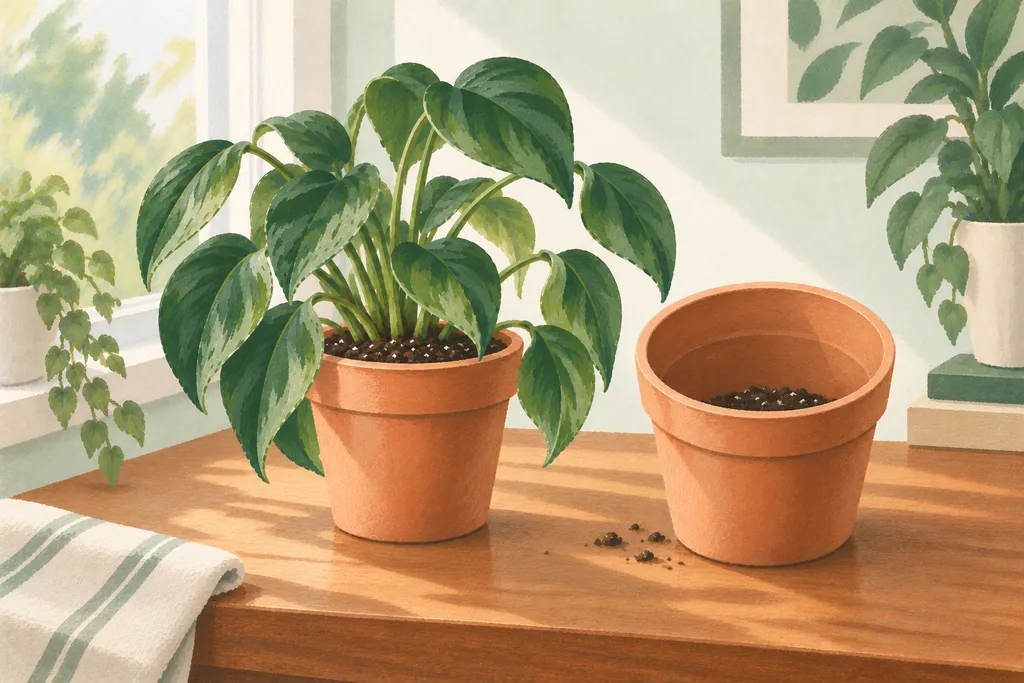
Repotting is the highest-volume houseplant job after watering, and it works best when it answers a visible need rather than a date. Illinois Extension (opens in a new tab) notes that some plants may need re-potting each year while others go for many years without — so the first skill is reading the signs.
Signs a plant has outgrown its pot
Illinois lists the indicators plainly: roots growing through the drainage holes, roots appearing on the soil surface, a soil mass filled with roots, new leaves smaller than usual, and wilting between normal waterings. Penn State Extension adds two useful refinements — potting mix that dries very quickly even in cooler weather, and growth that has stalled despite regular feeding through the growing season.
The deciding look is below the rim: slide the plant out and check whether roots circle the ball or pack it so densely that mix is barely visible in the bottom third — Penn State's test for pot-bound. The root-inspection guide covers that read in detail.
Timing and the growing season
When you have the choice, repot around the start of the growing season — though the sources reach that window for different reasons. Illinois calls spring or early summer typical, and Penn State prefers spring, when roots grow into the fresh mix and new foliage follows. Montana State recommends the earlier edge of the same window — late winter to early spring — because shorter days leave houseplants somewhat dormant, and it adds that a plant already showing its stress signs should not wait for the calendar. The signs matter more than the month.
When you do not have the choice — a plant already stressed, or a severely pot-bound shop plant — repot it rather than wait; Montana State's page makes that exception explicit.
Choosing the next pot: size and drainage
Go up a modest step: Penn State advises a container only slightly larger than the current one, and Montana State's rule of thumb is a pot about a third wider and deeper. Drainage holes are the one non-negotiable feature. A pot many sizes larger holds more wet mix than a small root system can use — one of the ways a kind intention becomes an overwatering problem.
On material, Montana State's notes are practical: plastic is light and inexpensive; ceramic's weight steadies a taller plant prone to tipping; unglazed terracotta is porous, shows salt buildup sooner, and wicks some moisture from the mix. Whatever the material, make sure drainage holes exist — a decorative outer pot without holes can still work if you check it does not fill with runoff, and a tray protects the surface underneath.
For the mix, Penn State recommends a good-quality soilless potting mix made for potted plants — perlite, vermiculite, peat moss, or coir in varying proportions — and notes that not every plant needs added fertilizer in the blend. A reused pot should be cleaned first; accumulated salts and old residue are worth washing away before they meet new roots.
The step order: out, inspect, settle, water
- Water enough beforehand to moisten the root ball so it holds together; have fresh mix ready, slightly damp.
- Tip the pot, support the stem base, and ease the root ball out — tap the sides, run a knife around the inside edge, or cut a flexible pot the plant has grown into.
- Read the roots: trim off dead, diseased, or damaged sections, and cut or unwind roots circling the ball.
- Set a layer of fresh mix in the new pot — an inch or two, depending on pot size — and centre the plant at the same depth it grew at before.
- Fill the sides gently, leaving about an inch below the rim so water has somewhere to go; firm lightly without packing it tight.
- Tap the pot to settle the mix, then water thoroughly and let it drain. Expect the mix to settle further — top it up once it has, and wash your hands when the handling is done.
If you are reusing part of the old mix, Montana State suggests adding at least half fresh soil to refurbish it; for most plants, fully fresh mix is the simpler answer.
What "transplant shock" usually is
Some yellowing or leaf drop after repotting is normal — Montana State says so directly, and recommends indirect light for a few days to soften the move. The plant is rebuilding the fine root hairs it lost in the transfer, and it does that best in steady, undemanding conditions.
Two temptations to resist while it settles. First, feeding: Montana State advises no fertilizer for at least two weeks, so the roots regenerate before being asked to process feed. Second, anxious watering: the fresh mix holds more moisture than the root-filled old pot did, so the check-below-the-surface habit matters more, not less, in the weeks after.
A realistic frame: A repot gives the plant room and fresh mix. It does not promise recovery from a problem that started elsewhere — which is why the last section exists.
When not to repot
A plant declining for unexplained reasons is not automatically asking for a bigger pot — wilting on wet mix can point at the roots' condition rather than their room, and the drooping-plant guide works through that distinction. If the cause is genuinely unknown, run the plant doctor first: a photo plus your notes on the mix and recent changes gives possible causes and the checks that narrow them down.
Illinois offers one more honest option for an old, tired, overgrown plant: sometimes the right move is to replace it, or to propagate a fresh plant from it, rather than repot indefinitely. A plant that is healthy but simply too large for its space may also stay in its pot with light root and top pruning — a different maintenance task, and a matter of judgement about the specimen in front of you.
Sources and further reading
- University of Illinois Extension, Repotting (opens in a new tab)
- Penn State Extension, Repotting Houseplants (opens in a new tab)
- Montana State University Extension, Ask Steward: How do I repot a houseplant (opens in a new tab)
Sources last checked 1 October 2026. Repotting is a mechanical task with a sensible order; it is not a cure for decline with another cause, and outcomes vary with the plant and its conditions.
Spotted an error? Tell us — include the page URL and what looks wrong.